
Best Air Purifiers in 2026: Top 10 HEPA Picks for Allergies, Pets, Smoke & Large Rooms
Our top pick for most people is the Coway Airmega AP-1512HH Mighty because it combines strong clean-air performance, a compact footprint, practical auto modes, and a reasonable long-term ownership profile. If you need more power for an open living area, choose the Levoit Core 600S. For quiet bedrooms and design-conscious rooms, the Blueair Blue Pure 311i Max is the most polished pick.
Choosing an air purifier is not just about buying the model with the biggest room-size claim. The better approach is to match CADR, room size, noise level, filter cost, odor needs, and daily usability. The best purifier is the one you can place correctly, run consistently, and maintain without hesitation.
This expanded guide is written for buyers comparing air purifiers for allergies, pets, smoke, dust, bedrooms, large rooms, and everyday indoor air quality. It explains not only which models we recommend, but why each one fits a particular use case, where each model has trade-offs, and what to check before clicking an affiliate link.
Quick picks: the best air purifiers in 2026
- Coway Airmega AP-1512HH Mighty: Best Overall — The AP-1512HH stands out because it balances performance and usability better than most competitors. Many purifiers win on one dimension: a higher CADR, a quieter sleep mode, a prettier shell, or a lower price. The Mighty is valuable because it avoids obvious weaknesses. It has enough airflow for medium rooms, a washable pre-filter for dust and hair, auto and Eco modes for everyday convenience, and a compact footprint that does not dominate a room.
- Levoit Core 600S: Best for Large Rooms — The Core 600S stands out because it combines large-room airflow with modern controls at a still-reasonable price. Some high-CADR purifiers feel like commercial equipment. This one is easier to live with: it has app scheduling, auto mode, a readable design, and a 360-degree intake that makes placement more flexible in real rooms.
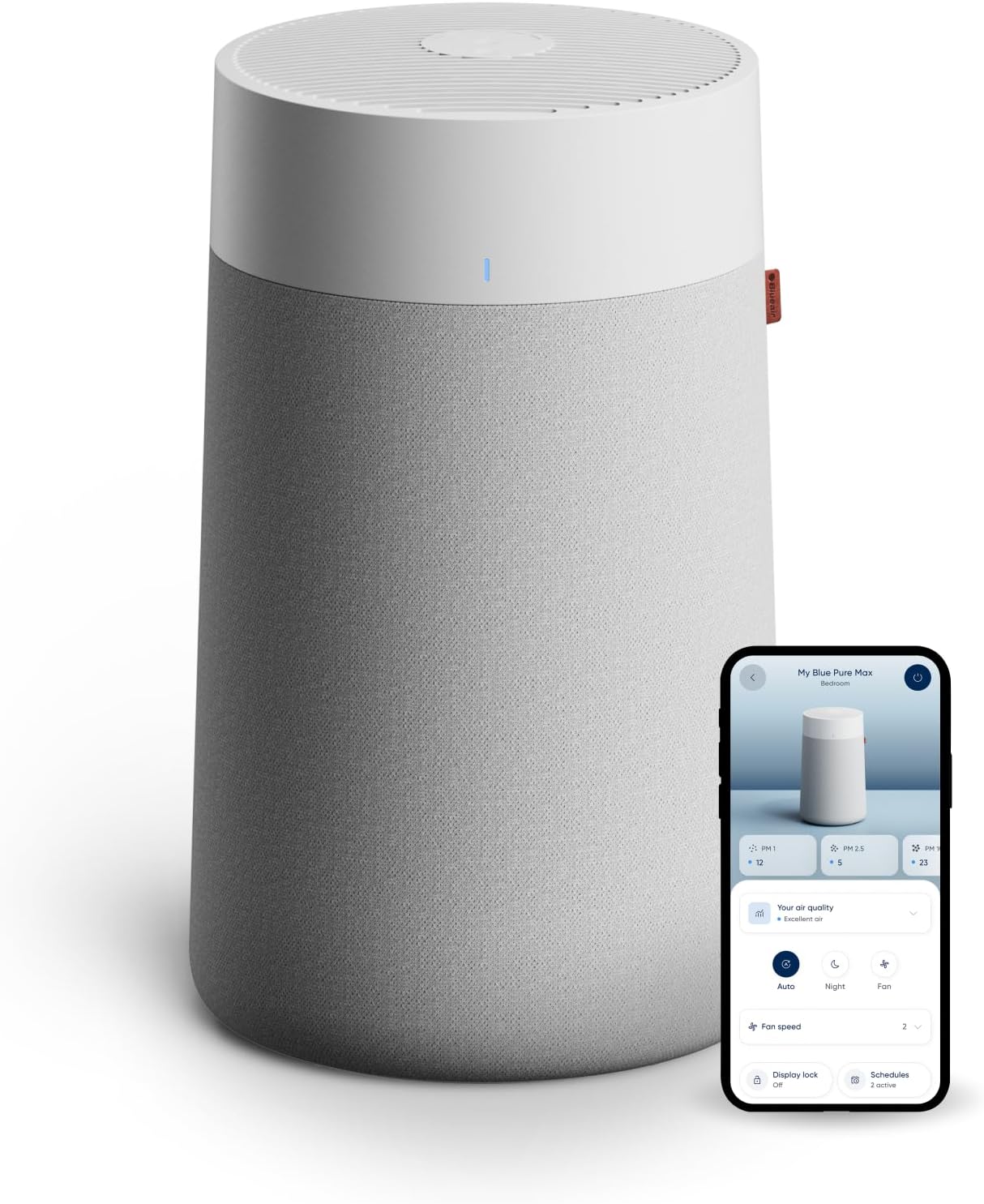
- Blueair Blue Pure 311i Max: Best Quiet Bedroom Pick — It stands out because it makes continuous use feel easy. Bedroom purifiers are only useful if people leave them on, and noise is the reason many buyers stop using a purifier after the first week. The Blue Pure 311i Max focuses on that everyday experience: quiet low-speed operation, simple controls, a clean app experience, and a design that does not look out of place beside a bed or chair.
- Winix 5500-2: Best for Pets and Odors — The 5500-2 stands out because of its washable activated carbon filter. Many budget purifiers include a very thin carbon layer that does little for meaningful odor control. The Winix approach is more useful for pet homes, cooking smells, and mixed household odors, while still giving you particle filtration for dust, dander, and pollen.
- Levoit Core 300S: Best Budget Smart Pick — The Core 300S stands out because it brings smart features to a smaller, more affordable purifier without becoming complicated. For many buyers, that matters more than maximum airflow. A bedroom purifier that turns on automatically, dims at night, and can be scheduled from a phone is more likely to be used every day.
- Coway Airmega 250: Best Premium Allergy Pick — The Airmega 250 stands out because it feels more like a modern home appliance while still focusing on real filtration. It gives you a stronger platform than a compact bedroom purifier and a more refined presence than many older high-CADR boxes.
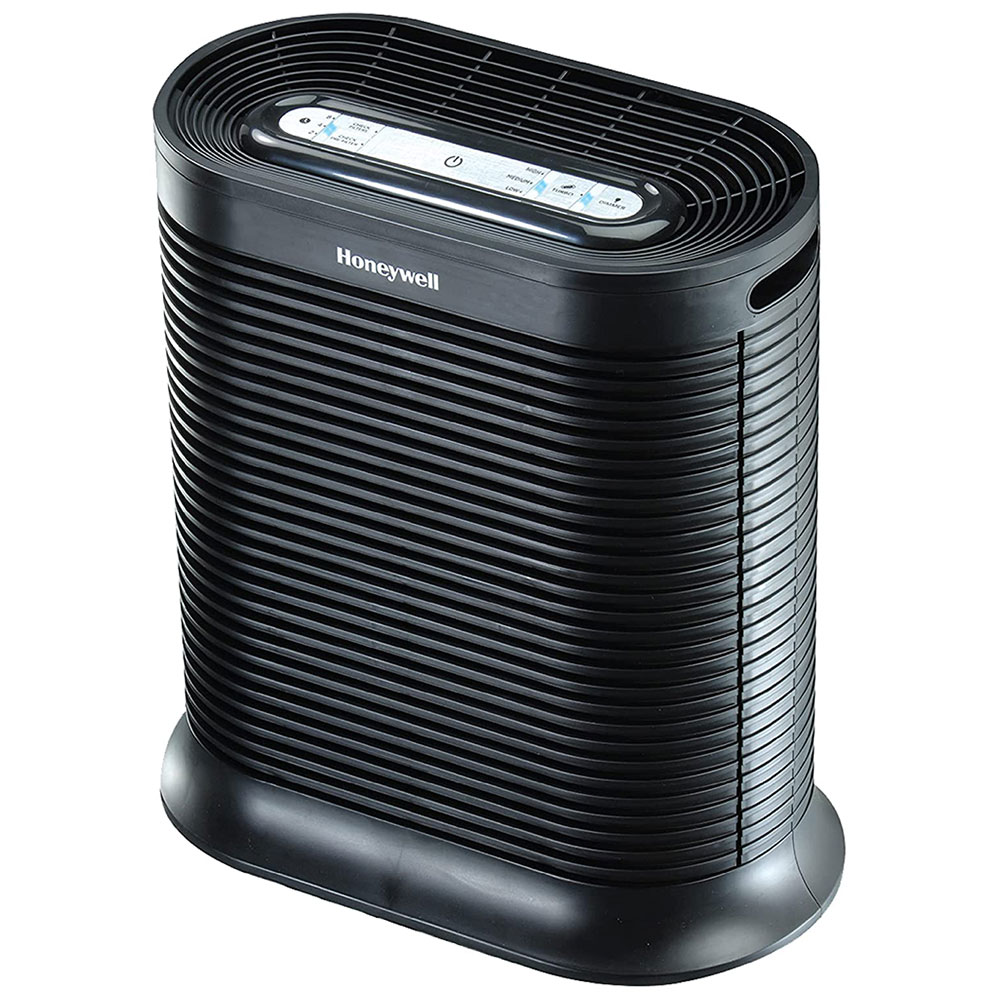
- Honeywell HPA300: Best Simple High-CADR Pick — The HPA300 stands out because it is easy to understand. You get a large purifier with strong airflow, straightforward button controls, and widely recognized Honeywell filter availability. It does not try to be a smart-home gadget.
- Rabbit Air A3: Best Design / Wall-Mount Pick — The A3 stands out because it solves a placement problem that many purifiers ignore. A wall-mounted purifier can work well in rooms where floor space is limited, where pets or children might bump into a tower unit, or where the purifier needs to feel like part of the room rather than clutter.
- Medify MA-40: Best High-Filtration Value — The MA-40 stands out because it offers high-grade filter configurations and large-room coverage claims at a price that can be more approachable than some premium design brands. It is a practical choice when you want the machine to focus on filtration rather than smart-home features.
- Dyson Purifier Cool TP07: Best Premium Fan-Purifier — The TP07 stands out because it is an air-quality appliance people actually notice and interact with. The app, display, fan function, oscillation, and sealed filtration design all contribute to a more premium ownership experience than a basic box purifier.
Best air purifiers compared
Use the comparison below to scan the shortlist by score, best-use case, key pros, watch-outs and shopping link.
The Coway Airmega AP-1512HH Mighty is the best first air purifier for most buyers because it combines strong CADR, practical controls, a compact footprint, and long-term value without relying on flashy extras. Best for: Most homes, bedrooms, apartments, allergy-season use The Core 600S-P is the model to choose when you need more airflow than a bedroom purifier can provide but still want a reasonable price, smart controls, and an easy-to-live-with design. Best for: Large bedrooms, open living rooms, smoke season, smart-home users The Blue Pure 311i Max is a polished bedroom and medium-room purifier that feels more refined than many box-style competitors, especially if quiet operation and design matter. Best for: Bedrooms, nurseries, design-conscious rooms, quiet continuous use The Winix 5500-2 remains one of the best value picks for pet homes because it pairs HEPA filtration with a serious washable carbon filter and sensible everyday controls. Best for: Pet owners, odor control, dust, dander, mixed-use living spaces The Core 300S-P is the easiest smart purifier to recommend for smaller rooms because it gives you app control, quiet operation, and legitimate filtration without a premium price. Best for: Bedrooms, apartments, first-time buyers, smart-home users on a budget The Airmega 250 is a more premium alternative to the AP-1512HH for buyers who want Coway reliability, a cleaner design, and more room to grow. Best for: Allergy-focused rooms, premium medium-to-large spaces, quiet daily use The HPA300 is not stylish, but it is powerful, straightforward, and easy to understand — exactly what many buyers want from a large-room purifier. Best for: Large rooms, simple controls, buyers who do not want apps The Rabbit Air A3 is the design-first purifier for buyers who want clean air equipment that looks intentional rather than temporary. Best for: Design-focused homes, wall mounting, customized filtration needs The Medify MA-40 is a strong choice when you want a serious HEPA-focused purifier for larger rooms and do not need a lifestyle app or decorative shell. Best for: Large bedrooms, offices, classrooms, buyers who want H13 or H14 options The TP07 is the premium lifestyle pick: excellent if you want Dyson design, app data, and fan functionality, but not the best value if you only want maximum clean-air output per dollar. Best for: Premium design, app data, cooling airflow, Dyson ecosystem buyers
Coway Airmega AP-1512HH Mighty

Levoit Core 600S-P
Blueair Blue Pure 311i Max

Winix 5500-2

Levoit Core 300S-P

Coway Airmega 250
Honeywell HPA300

Rabbit Air A3

Medify MA-40

Dyson Purifier Cool TP07
How we chose these air purifiers
This guide prioritizes models that make sense for real homes: strong particle removal for the room size, credible filtration, reasonable noise, practical replacement filters, and features people actually use. We looked at manufacturer specifications, CADR and room-size data, filtration design, maintenance requirements, warranty information, smart features, and independent review data where available.
For sizing, we considered guidance from the Association of Home Appliance Manufacturers, whose CADR program measures smoke, pollen, and dust performance. We also considered the EPA’s guidance that portable air cleaners are designed for single rooms or areas and can reduce, but not eliminate, indoor air pollution.
Editorial note: This is a research-based buyer’s guide, not a lab-test article. We avoid claims such as “we tested” unless a model has been tested directly by BestGearScout. If hands-on testing is added later, this guide should be updated with original photos, test-room dimensions, particle readings, sound measurements, filter-cost calculations, and long-term notes.
What we weighted most heavily
- Clean-air performance: CADR, room suitability, filter design, and whether the purifier has enough airflow for realistic daily use.
- Use-case fit: whether the product is best for bedrooms, pets, odors, smoke, large rooms, design-focused spaces, or budget buyers.
- Long-term ownership: replacement filter cost, filter availability, washable pre-filters, warranty, and how easy it is to keep the unit running.
- Daily usability: noise, display-off mode, auto mode, app usefulness, control simplicity, size, and placement flexibility.
- Value: whether the purifier delivers enough benefit for its typical price compared with similar alternatives.
Room sizing and CADR: the part most buyers get wrong
Air purifier marketing often leads with large “covers up to” numbers. Those claims can be useful, but only if you understand how they are calculated. A purifier may claim a very large area at one air change per hour, while allergy and smoke use cases usually benefit from more frequent air changes.
CADR, or Clean Air Delivery Rate, is one of the most useful comparison numbers because it describes how much filtered air the purifier can deliver. AHAM’s CADR program reports separate values for smoke, pollen, and dust, and the EPA recommends choosing a CADR that is large enough for the room or area where the purifier will run.
Simple CADR rule of thumb
As a practical starting point, choose a purifier with a smoke CADR of at least about two-thirds of your room’s square footage. For a 150 sq ft bedroom, that means roughly 100 CFM smoke CADR or more. For a 300 sq ft living room, look for roughly 200 CFM or more. For wildfire smoke, pets, high ceilings, or open layouts, size up rather than cutting it close.
Quick room-size cheat sheet
- Small bedroom, nursery, or office: compact smart purifiers like the Levoit Core 300S can make sense.
- Typical bedroom or apartment living room: balanced models like the Coway AP-1512HH are easier to recommend.
- Large bedroom or open living area: higher-airflow units like the Levoit Core 600S or Honeywell HPA300 are safer choices.
- Pet areas and odor-prone spaces: prioritize pre-filter access, carbon capacity, and filter cost, not just particle CADR.
- Design-focused visible rooms: consider whether a purifier will actually stay in the room. A prettier model can be more effective if it means you run it daily.
Detailed reviews
1. Coway Airmega AP-1512HH Mighty — Best Overall
Best for: Most homes, bedrooms, apartments, allergy-season use
BestGearScout score: 9.4/10
The Coway Airmega AP-1512HH Mighty is the best first air purifier for most buyers because it combines strong CADR, practical controls, a compact footprint, and long-term value without relying on flashy extras.
Why it earns this spot
Coway Airmega AP-1512HH Mighty is evaluated for day-to-day livability: room coverage, noise, filter approach, controls, and whether it is practical to run continuously for Most homes, bedrooms, apartments, and allergy-season use. Its strongest arguments are Excellent balance of CADR, price, size, and usability and Washable pre-filter helps capture larger dust and hair.
What to check before buying
The main caveats are Design is practical rather than premium and Ionizer should be left off if you prefer filter-only purification. The key specs to check are Recommended room size: about 361 sq ft, CADR: dust 246 CFM, pollen 240 CFM, smoke 233 CFM, and Filtration: pre-filter, deodorization/carbon filter, True HEPA filter, optional ionizer. For air purifiers, the right choice depends on the room size, filter replacement routine, noise tolerance, and whether odor control matters.
Key specs
- Recommended room size: about 361 sq ft
- CADR: dust 246 CFM, pollen 240 CFM, smoke 233 CFM
- Filtration: pre-filter, deodorization/carbon filter, True HEPA filter, optional ionizer
- Best placement: bedrooms, home offices, living rooms up to medium size
Pros
- Excellent balance of CADR, price, size, and usability
- Washable pre-filter helps capture larger dust and hair
- Auto and Eco modes make it easy to run continuously
- Compact enough for bedrooms and apartments
Cons
- Design is practical rather than premium
- Ionizer should be left off if you prefer filter-only purification
- Not ideal as the only purifier for very large open-plan spaces
2. Levoit Core 600S — Best for Large Rooms
Best for: Large bedrooms, open living rooms, smoke season, smart-home users
BestGearScout score: 9.2/10
The Core 600S is the model to choose when you need more airflow than a bedroom purifier can provide but still want a reasonable price, smart controls, and an easy-to-live-with design.
Why it earns this spot
Levoit Core 600S is evaluated for day-to-day livability: room coverage, noise, filter approach, controls, and whether it is practical to run continuously for Large bedrooms, open living rooms, smoke season, and smart-home users. Its strongest arguments are High CADR for larger spaces and Smart app, auto mode, schedules, and air-quality readout.
What to check before buying
The main caveats are Takes more floor space than compact bedroom models and Turbo mode is noticeable. The key specs to check are Ideal room size: 606 sq ft at 4.8 ACH according to Levoit, CADR: 391 CFM, and Noise: 26–55 dB manufacturer rating. For air purifiers, the right choice depends on the room size, filter replacement routine, noise tolerance, and whether odor control matters.
Key specs
- Ideal room size: 606 sq ft at 4.8 ACH according to Levoit
- CADR: 391 CFM
- Noise: 26–55 dB manufacturer rating
- Filtration: pre-filter, main particle filter, activated carbon
Pros
- High CADR for larger spaces
- Smart app, auto mode, schedules, and air-quality readout
- Good value compared with many premium large-room purifiers
- 360-degree intake is easy to place in open rooms
Cons
- Takes more floor space than compact bedroom models
- Turbo mode is noticeable
- Overkill for small rooms
3. Blueair Blue Pure 311i Max — Best Quiet Bedroom Pick
Best for: Bedrooms, nurseries, design-conscious rooms, quiet continuous use
BestGearScout score: 9.1/10
The Blue Pure 311i Max is a polished bedroom and medium-room purifier that feels more refined than many box-style competitors, especially if quiet operation and design matter.
Why it earns this spot
Blueair Blue Pure 311i Max is evaluated for day-to-day livability: room coverage, noise, filter approach, controls, and whether it is practical to run continuously for Bedrooms, nurseries, design-conscious rooms, and quiet continuous use. Its strongest arguments are Quiet low-speed operation and Attractive fabric pre-filter design.
What to check before buying
The main caveats are Some buyers prefer ionization that can be fully disabled and Replacement filters are not the cheapest. The key specs to check are Room size: Blueair lists around 387–439 sq ft depending on rating context, Noise: about 23–50 dB according to Blueair, and Filtration: HEPASilent dual filtration with fabric pre-filter. For air purifiers, the right choice depends on the room size, filter replacement routine, noise tolerance, and whether odor control matters.
Key specs
- Room size: Blueair lists around 387–439 sq ft depending on rating context
- Noise: about 23–50 dB according to Blueair
- Filtration: HEPASilent dual filtration with fabric pre-filter
- Best placement: bedrooms and medium rooms
Pros
- Quiet low-speed operation
- Attractive fabric pre-filter design
- Strong room coverage for the size
- Smart features without a complicated interface
Cons
- Some buyers prefer ionization that can be fully disabled
- Replacement filters are not the cheapest
- Fabric pre-filter may not suit every interior style
4. Winix 5500-2 — Best for Pets and Odors
Best for: Pet owners, odor control, dust, dander, mixed-use living spaces
BestGearScout score: 8.9/10
The Winix 5500-2 remains one of the best value picks for pet homes because it pairs HEPA filtration with a serious washable carbon filter and sensible everyday controls.
Why it earns this spot
Winix 5500-2 is evaluated for day-to-day livability: room coverage, noise, filter approach, controls, and whether it is practical to run continuously for Pet owners, odor control, dust, dander, and mixed-use living spaces. Its strongest arguments are Washable activated carbon filter is useful for odors and Strong CADR for the price class.
What to check before buying
The main caveats are Boxy design is less refined than newer competitors and PlasmaWave feature may not appeal to filter-only buyers. The key specs to check are CADR: about 390 m³/h in Winix Europe listing, Commonly recommended for medium rooms, and Filtration: washable pre-filter, activated carbon, True HEPA, PlasmaWave. For air purifiers, the right choice depends on the room size, filter replacement routine, noise tolerance, and whether odor control matters.
Key specs
- CADR: about 390 m³/h in Winix Europe listing
- Commonly recommended for medium rooms
- Filtration: washable pre-filter, activated carbon, True HEPA, PlasmaWave
- Best placement: living rooms, pet areas, bedrooms
Pros
- Washable activated carbon filter is useful for odors
- Strong CADR for the price class
- Auto mode and air-quality sensor included
- Good fit for pet hair, dander, and everyday household particles
Cons
- Boxy design is less refined than newer competitors
- PlasmaWave feature may not appeal to filter-only buyers
- No advanced app ecosystem
5. Levoit Core 300S — Best Budget Smart Pick
Best for: Bedrooms, apartments, first-time buyers, smart-home users on a budget
BestGearScout score: 8.7/10
The Core 300S is the easiest smart purifier to recommend for smaller rooms because it gives you app control, quiet operation, and legitimate filtration without a premium price.
Why it earns this spot
Levoit Core 300S is evaluated for day-to-day livability: room coverage, noise, filter approach, controls, and whether it is practical to run continuously for Bedrooms, apartments, first-time buyers, and smart-home users on a budget. Its strongest arguments are Compact and easy to place and Smart app and voice-assistant support.
What to check before buying
The main caveats are Not powerful enough for large open spaces and Smaller filter means more limited odor capacity. The key specs to check are Ideal room size: 219 sq ft at 4.8 ACH according to Levoit, CADR: 141 CFM / 240 m³/h, and Noise: 22–50 dB manufacturer rating. For air purifiers, the right choice depends on the room size, filter replacement routine, noise tolerance, and whether odor control matters.
Key specs
- Ideal room size: 219 sq ft at 4.8 ACH according to Levoit
- CADR: 141 CFM / 240 m³/h
- Noise: 22–50 dB manufacturer rating
- Dimensions: 8.7 x 8.7 x 14.2 in
Pros
- Compact and easy to place
- Smart app and voice-assistant support
- Quiet sleep mode
- Good entry point for bedrooms and small rooms
Cons
- Not powerful enough for large open spaces
- Smaller filter means more limited odor capacity
- Best performance requires keeping doors mostly closed
6. Coway Airmega 250 — Best Premium Allergy Pick
Best for: Allergy-focused rooms, premium medium-to-large spaces, quiet daily use
BestGearScout score: 8.6/10
The Airmega 250 is a more premium alternative to the AP-1512HH for buyers who want Coway reliability, a cleaner design, and more room to grow.
Why it earns this spot
Coway Airmega 250 is evaluated for day-to-day livability: room coverage, noise, filter approach, controls, and whether it is practical to run continuously for Allergy-focused rooms, premium medium-to-large spaces, and quiet daily use. Its strongest arguments are Premium build and attractive front-panel design and Strong particle filtration for medium-to-large rooms.
What to check before buying
The main caveats are Costs more than the AP-1512HH and Larger and heavier than compact purifiers. The key specs to check are Coway lists up to 1,860 sq ft in 60 minutes, CADR: 504 m³/h in Coway AU specifications, and Filter: washable pre-filter plus Max2 Green filter. For air purifiers, the right choice depends on the room size, filter replacement routine, noise tolerance, and whether odor control matters.
Key specs
- Coway lists up to 1,860 sq ft in 60 minutes
- CADR: 504 m³/h in Coway AU specifications
- Filter: washable pre-filter plus Max2 Green filter
- Best placement: allergy-focused bedrooms and living spaces
Pros
- Premium build and attractive front-panel design
- Strong particle filtration for medium-to-large rooms
- Real-time air-quality indicator
- Good choice if the AP-1512HH feels too basic
Cons
- Costs more than the AP-1512HH
- Larger and heavier than compact purifiers
- Not as widely discounted as older Coway models
7. Honeywell HPA300 — Best Simple High-CADR Pick
Best for: Large rooms, simple controls, buyers who do not want apps
BestGearScout score: 8.4/10
The HPA300 is not stylish, but it is powerful, straightforward, and easy to understand — exactly what many buyers want from a large-room purifier.
Why it earns this spot
Honeywell HPA300 is evaluated for day-to-day livability: room coverage, noise, filter approach, controls, and whether it is practical to run continuously for Large rooms, simple controls, and buyers who do not want apps. Its strongest arguments are Strong CADR numbers for the price and Simple button controls.
What to check before buying
The main caveats are Bulky design and No smart features. The key specs to check are Recommended room size: 465 sq ft according to Honeywell, CADR: smoke 300, dust 320, pollen 300 CFM in common listings, and Dimensions: 20.8 x 10.83 x 22.38 in. For air purifiers, the right choice depends on the room size, filter replacement routine, noise tolerance, and whether odor control matters.
Key specs
- Recommended room size: 465 sq ft according to Honeywell
- CADR: smoke 300, dust 320, pollen 300 CFM in common listings
- Dimensions: 20.8 x 10.83 x 22.38 in
- Warranty: 5-year limited warranty in Honeywell listing
Pros
- Strong CADR numbers for the price
- Simple button controls
- Longstanding, widely available model
- Good for buyers who want no app, no voice assistant, no learning curve
Cons
- Bulky design
- No smart features
- Filter replacement cost should be checked before buying
8. Rabbit Air A3 — Best Design / Wall-Mount Pick
Best for: Design-focused homes, wall mounting, customized filtration needs
BestGearScout score: 8.3/10
The Rabbit Air A3 is the design-first purifier for buyers who want clean air equipment that looks intentional rather than temporary.
Why it earns this spot
Rabbit Air A3 is evaluated for day-to-day livability: room coverage, noise, filter approach, controls, and whether it is practical to run continuously for Design-focused homes, wall mounting, and customized filtration needs. Its strongest arguments are Can be wall mounted and Attractive design options.
What to check before buying
The main caveats are Expensive compared with CADR-focused competitors and Not the best value if you only care about raw airflow. The key specs to check are Coverage: up to 1,070 sq ft at 2 ACH, 535 sq ft at 4 ACH according to Rabbit Air, Weight: 20.3 lb, and Dimensions: 19.7H x 18.9W x 8.4D in. For air purifiers, the right choice depends on the room size, filter replacement routine, noise tolerance, and whether odor control matters.
Key specs
- Coverage: up to 1,070 sq ft at 2 ACH, 535 sq ft at 4 ACH according to Rabbit Air
- Weight: 20.3 lb
- Dimensions: 19.7H x 18.9W x 8.4D in
- Best placement: visible rooms, bedrooms, offices, wall-mount setups
Pros
- Can be wall mounted
- Attractive design options
- Custom filter choices for different needs
- Quiet, premium feel
Cons
- Expensive compared with CADR-focused competitors
- Not the best value if you only care about raw airflow
- Replacement filters are more specialized
9. Medify MA-40 — Best High-Filtration Value
Best for: Large bedrooms, offices, classrooms, buyers who want H13 or H14 options
BestGearScout score: 8.2/10
The Medify MA-40 is a strong choice when you want a serious HEPA-focused purifier for larger rooms and do not need a lifestyle app or decorative shell.
Why it earns this spot
Medify MA-40 is evaluated for day-to-day livability: room coverage, noise, filter approach, controls, and whether it is practical to run continuously for Large bedrooms, offices, classrooms, and buyers who want H13 or H14 options. Its strongest arguments are Available with high-grade HEPA filtration options and Large-room coverage claims at a mid-premium price.
What to check before buying
The main caveats are Filter costs can add up and Noise on higher speeds is noticeable. The key specs to check are Coverage: Medify lists up to 896 sq ft in 30 minutes for MA-40, Filtration: True HEPA H13 or H14 options depending on configuration, and Best placement: offices, large bedrooms, classrooms. For air purifiers, the right choice depends on the room size, filter replacement routine, noise tolerance, and whether odor control matters.
Key specs
- Coverage: Medify lists up to 896 sq ft in 30 minutes for MA-40
- Filtration: True HEPA H13 or H14 options depending on configuration
- Best placement: offices, large bedrooms, classrooms
- CTA note: verify exact filter version before purchasing
Pros
- Available with high-grade HEPA filtration options
- Large-room coverage claims at a mid-premium price
- Simple tower design
- Useful for offices, dorms, and classrooms
Cons
- Filter costs can add up
- Noise on higher speeds is noticeable
- Coverage claims should be matched to realistic room size and ACH goals
10. Dyson Purifier Cool TP07 — Best Premium Fan-Purifier
Best for: Premium design, app data, cooling airflow, Dyson ecosystem buyers
BestGearScout score: 8/10
The TP07 is the premium lifestyle pick: excellent if you want Dyson design, app data, and fan functionality, but not the best value if you only want maximum clean-air output per dollar.
Why it earns this spot
Dyson Purifier Cool TP07 is evaluated for day-to-day livability: room coverage, noise, filter approach, controls, and whether it is practical to run continuously for Premium design, app data, cooling airflow, and Dyson ecosystem buyers. Its strongest arguments are Combines air purifier and bladeless fan and Excellent app and air-quality data experience.
What to check before buying
The main caveats are Expensive for purification alone and Raw CADR value is not the main selling point. The key specs to check are Filtration: HEPA H13 and activated carbon in a sealed system according to Dyson, Function: purifier plus cooling fan, and Best placement: bedrooms, offices, design-led living rooms. For air purifiers, the right choice depends on the room size, filter replacement routine, noise tolerance, and whether odor control matters.
Key specs
- Filtration: HEPA H13 and activated carbon in a sealed system according to Dyson
- Function: purifier plus cooling fan
- Best placement: bedrooms, offices, design-led living rooms
- Buyer note: choose it for features and design, not pure CADR-per-dollar
Pros
- Combines air purifier and bladeless fan
- Excellent app and air-quality data experience
- Fully sealed HEPA H13 standard according to Dyson
- Premium design fits modern rooms
Cons
- Expensive for purification alone
- Raw CADR value is not the main selling point
- Filter replacements are premium priced
How to choose the right air purifier
1. Start with room size and CADR
CADR, or Clean Air Delivery Rate, is one of the most useful numbers when comparing air purifiers. A higher CADR means the purifier can deliver more filtered air per minute. For general use, a common rule of thumb is to choose a purifier with a smoke CADR equal to at least about two-thirds of the room’s square footage. For wildfire smoke, sizing up is usually smarter.
2. Do not rely only on “covers up to” claims
Many product pages advertise very large coverage numbers based on one air change per hour. That can be misleading for allergies, smoke, and real-world particle control. For bedrooms, pet areas, and allergy-focused spaces, look for a purifier that can provide several air changes per hour in the room where it will actually run.
3. Check filter replacement cost before buying
The cheapest purifier is not always the cheapest purifier to own. A slightly more expensive model with washable pre-filters, widely available replacement filters, or longer filter life may be a better value over two or three years. Before buying, check the cost of a full filter set, not just the purifier itself.
4. Match the filter to your problem
- Dust, pollen, smoke, and pet dander: prioritize high CADR and a strong particle filter.
- Odors and cooking smells: look for a meaningful activated carbon filter, not just a thin carbon-coated sheet.
- Bedrooms: prioritize low-speed noise, display-off mode, and a purifier you can tolerate overnight.
- Large rooms: prioritize CADR and realistic air changes per hour rather than design alone.
- Pets: prioritize washable pre-filters, easy intake cleaning, and carbon support for odor management.
5. Avoid ozone-first marketing
For home use, most buyers should focus on physical filtration and verified low-ozone or zero-ozone designs. The California Air Resources Board regulates indoor air cleaners sold in California to limit ozone emissions, and checking CARB certification is a sensible step when a purifier includes ionization or similar technology.
6. Think about placement before buying
A purifier cannot work well if it is wedged behind furniture, blocked by curtains, or placed where air cannot circulate. Before buying, decide where the unit will live. A compact purifier that can sit in the right spot may outperform a larger purifier that gets pushed into a corner because it is too bulky.
7. Buy for the room you actually use
Many people buy one purifier and expect it to clean the whole house. A better approach is to put the strongest purifier in the room where the problem matters most: the bedroom during allergy season, the living room during wildfire smoke, the office during work hours, or the room where pets spend the most time.
Common air purifier mistakes to avoid
Buying too small
This is the most common mistake. A small purifier can look attractive because it is cheaper and quieter, but if the room is too large, it may need to run at high speed all the time and still underperform.
Ignoring filter costs
Some purifiers are affordable upfront but expensive to maintain. Always check the price and availability of replacement filters before buying, especially if you expect to run the purifier every day.
Turning it off too often
Air purifiers work best when they run consistently. If noise bothers you, choose a larger purifier and run it at a lower speed rather than buying a small purifier that has to run loudly.
Expecting odor miracles from a particle filter
HEPA-style particle filters are excellent for particles such as dust, pollen, dander, and smoke particles. Odors and gases require activated carbon or other sorbent media, and the amount of carbon matters.
Forgetting source control
An air purifier can help reduce airborne pollution, but it cannot replace cleaning, ventilation when outdoor air is safe, moisture control, mold remediation, or removing the pollution source.
FAQ: Air purifiers
What is the best air purifier for most people?
For most buyers, the Coway Airmega AP-1512HH Mighty is the best starting point because it offers strong performance, manageable size, useful auto modes, and good value. Large-room buyers should consider the Levoit Core 600S, while bedroom buyers should consider the Blueair Blue Pure 311i Max or Levoit Core 300S.
Do air purifiers help with allergies?
Air purifiers can reduce airborne particles such as pollen, dust, pet dander, and smoke in a single room or area. They do not cure allergies, remove every pollutant, or fix the source of mold and moisture problems, but they can be a useful part of an indoor air-quality plan.
Can one air purifier clean a whole house?
Usually no. Portable air purifiers are designed for a single room or area. A better strategy is to place the right-sized purifier in the rooms where you spend the most time, such as bedrooms, living rooms, offices, and pet areas.
What CADR do I need?
As a simple starting point, multiply your room’s square footage by two-thirds to estimate the minimum smoke CADR for general use. For example, a 300 sq ft room should use a purifier with at least about 200 CFM smoke CADR. If you are dealing with wildfire smoke, allergies, pets, tall ceilings, or open layouts, size up.
Are smart air purifiers worth it?
Smart features are worth it if they help you run the purifier more consistently. App schedules, auto mode, air-quality sensors, and display-off settings can be genuinely useful. If you prefer simple controls and do not want apps, models like the Honeywell HPA300 are easier to live with.
How often should I replace filters?
Follow the manufacturer’s schedule and check the filter more often if you have pets, wildfire smoke, heavy dust, or frequent cooking odors. A clogged filter reduces airflow and can make the purifier noisier and less effective.
Do air purifiers remove smells?
Some do, but only if they have enough activated carbon or similar gas/odor filtration media. A purifier with a thin carbon sheet may reduce mild odors, but serious cooking smells, litter-box odors, and smoke odors require more carbon capacity and source control.
Should I run an air purifier all day?
In many homes, yes. Air purifiers work best when they run continuously at a comfortable fan speed. Auto mode can help reduce fan noise when particle levels are low, but during pollen or smoke events, a steady higher setting may be more effective.
Where should I place an air purifier?
Place it in the room where you spend the most time and keep the intake and exhaust clear. Avoid blocking it with furniture, curtains, beds, or walls. For bedrooms, place it where airflow can circulate but where the noise and display will not bother your sleep.
Final verdict: which air purifier should you buy?
Buy the Coway Airmega AP-1512HH Mighty if you want the safest all-around choice for a normal bedroom, apartment, or home office. Buy the Levoit Core 600S if you need stronger airflow for a large room. Buy the Blueair Blue Pure 311i Max if quiet operation and design matter most. Buy the Winix 5500-2 if you have pets and want better odor support at a reasonable price.
The best long-term choice is the purifier you will actually run every day. Match the CADR to your room, check the filter cost, place the unit where it can breathe, and keep doors and windows mostly closed while it runs.
How we choose and rank products
We compare products using a consistent editorial framework: real-world use cases, feature depth, long-term value, owner feedback patterns, build quality, warranty/support, and price-to-performance. Scores are updated when product specs, pricing, or availability materially change.


Leave a Reply