
Choose Blueair if quiet bedroom use and a softer room-friendly design matter most. This comparison keeps the decision focused on real buyer fit instead of treating both products as interchangeable.
Last updated: May 5, 2026
We refresh this guide when new products, stronger alternatives, or important specification changes affect the recommendations.

Quick verdict
Choose Blueair if quiet bedroom use and a softer room-friendly design matter most. Choose Coway Airmega 250 if you want a more premium medium-room purifier with stronger allergy-focused presence.
Where Blueair Blue Pure 311i Max wins
In this matchup, Blueair Blue Pure 311i Max is the better direction when its use case solves the problem that made you compare these two products in the first place. The card below gives the compact scorecard; the points here focus on the decision context.
Choose it when
- It belongs on the shortlist when the product needs to stay livable during long sessions, work hours or overnight use.
- The listed room size figure — Blueair lists around 387–439 sq ft depending on rating context — should be checked against the real room size and the fan speed you will actually use.
- The listed noise figure — about 23–50 dB according to Blueair — should be checked against the real room size and the fan speed you will actually use.
- Check placement, doorways, furniture and filter access before assuming the published coverage number will translate cleanly to your room.
Trade-off to check
Confirm the air-cleaning settings match your preference if you want a filter-only setup. If that trade-off is not a problem for your setup, this product remains a sensible finalist.
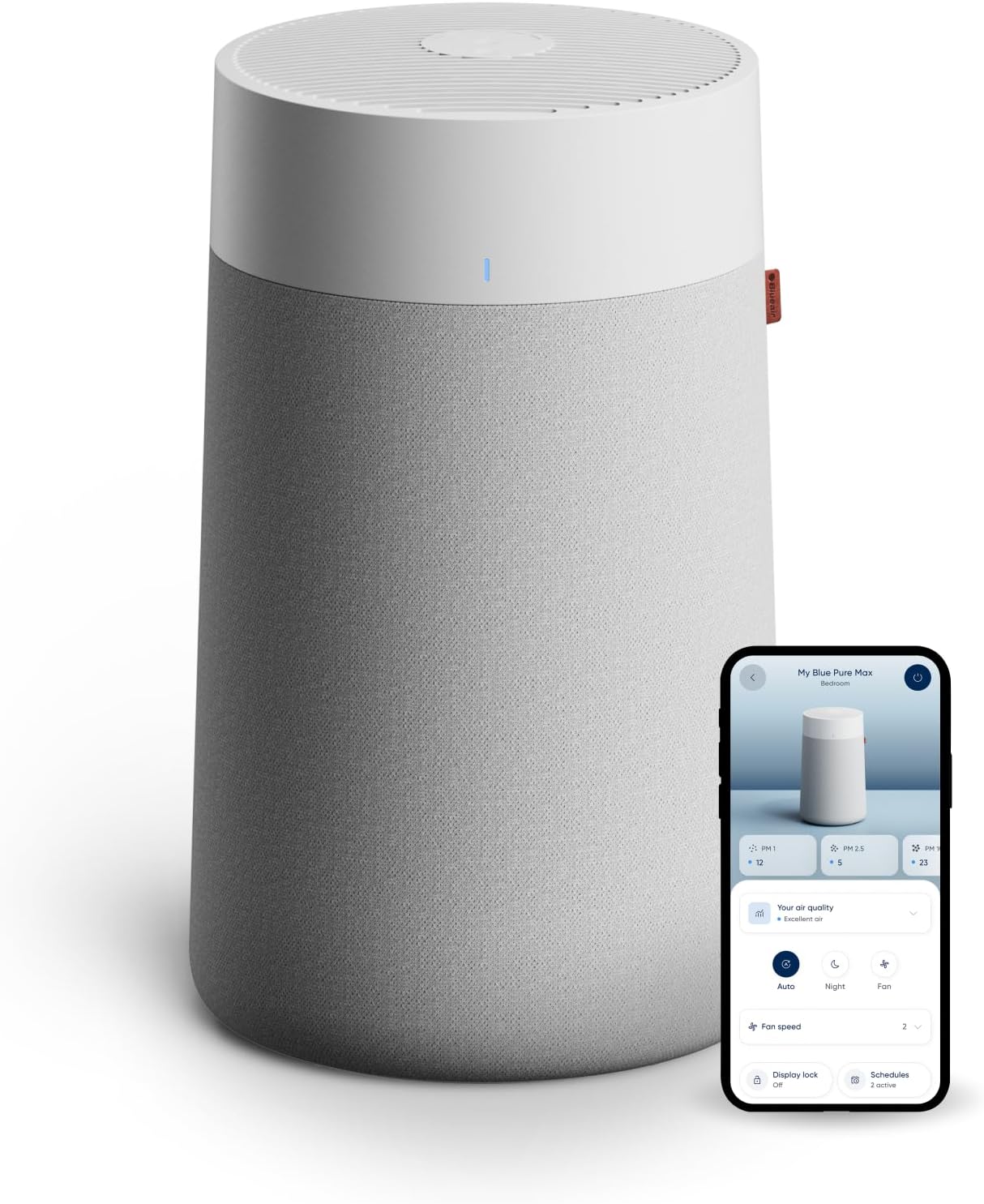
Best for: Bedrooms, nurseries, design-conscious rooms, quiet continuous use The Blue Pure 311i Max is a polished bedroom and medium-room purifier that feels more refined than many box-style competitors, especially if quiet operation and design matter.Blueair Blue Pure 311i Max
9.1/10
Where Coway Airmega 250 wins
In this matchup, Coway Airmega 250 is the better direction when its use case solves the problem that made you compare these two products in the first place. The card below gives the compact scorecard; the points here focus on the decision context.
Choose it when
- Its main advantage is practical fit: the scorecard points to a product with a clear use case rather than a purely spec-driven recommendation.
- One product-data note to verify against your use case: Coway lists up to 1,860 sq ft in 60 minutes.
- The listed cadr figure — 504 m³/h in Coway AU specifications — should be checked against the real room size and the fan speed you will actually use.
- Check placement, doorways, furniture and filter access before assuming the published coverage number will translate cleanly to your room.
Trade-off to check
The value question is total ownership cost: the product may be worth it only if you will use the capability that raises the price. If that trade-off is not a problem for your setup, this product remains a sensible finalist.
Best for: Allergy-focused rooms, premium medium-to-large spaces, quiet daily use The Airmega 250 is a more premium alternative to the AP-1512HH for buyers who want Coway reliability, a cleaner design, and more room to grow.Coway Airmega 250
8.6/10
Key trade-offs
The better choice depends on which compromise you would rather live with. Blueair Blue Pure 311i Max is strongest when its main use case matches your daily routine. Coway Airmega 250 makes more sense if its strengths solve a problem the other product does not prioritize.
Choose Blueair Blue Pure 311i Max if…
- you need a purifier whose airflow, noise level, filtration approach and upkeep costs all fit the room
- It belongs on the shortlist when the product needs to stay livable during long sessions, work hours or overnight use.
- Maintenance is part of the value calculation, so filter access and upkeep should be considered before the purchase.
Choose Coway Airmega 250 if…
- you need a purifier whose airflow, noise level, filtration approach and upkeep costs all fit the room
- Its main advantage is practical fit: the scorecard points to a product with a clear use case rather than a purely spec-driven recommendation.
- Airflow headroom is the reason to look at it first, especially when the room is larger than a simple bedroom setup.
Detailed decision matrix
Do not read this matchup as a simple winner-and-loser article. Blueair Blue Pure 311i Max and Coway Airmega 250 make sense for different buyers, and the better choice is the one that removes the biggest friction in your day-to-day use.
Choose Blueair Blue Pure 311i Max if…
- It is aimed at bedrooms, nurseries, design-conscious rooms, quiet continuous use.
- It belongs on the shortlist when the product needs to stay livable during long sessions, work hours or overnight use..
- Maintenance is part of the value calculation, so filter access and upkeep should be considered before the purchase..
- Its main advantage is practical fit: the scorecard points to a product with a clear use case rather than a purely spec-driven recommendation..
- Key specs or positioning from the product data: Room size: Blueair lists around 387–439 sq ft depending on rating context; Noise: about 23–50 dB according to Blueair; Filtration: HEPASilent dual filtration with fabric pre-filter.
- Watch-out: Some buyers prefer ionization that can be fully disabled.
Choose Coway Airmega 250 if…
- It is aimed at allergy-focused rooms, premium medium-to-large spaces, quiet daily use.
- Its main advantage is practical fit: the scorecard points to a product with a clear use case rather than a purely spec-driven recommendation..
- Airflow headroom is the reason to look at it first, especially when the room is larger than a simple bedroom setup..
- Its main advantage is practical fit: the scorecard points to a product with a clear use case rather than a purely spec-driven recommendation..
- Key specs or positioning from the product data: Coway lists up to 1,860 sq ft in 60 minutes; CADR: 504 m³/h in Coway AU specifications; Filter: washable pre-filter plus Max2 Green filter.
- Watch-out: The value question is total ownership cost: the product may be worth it only if you will use the capability that raises the price..
Ownership trade-offs to check before buying
The short verdict is useful, but the long-term ownership details are where close comparisons are usually decided. Before choosing, compare these points against your actual room, workflow, trip style or daily routine.
- Room size and clean-air delivery instead of only claimed square footage.
- Noise on the speed you will actually use overnight or while working.
- Filter replacement cost and carbon depth for odor-heavy homes.
- Controls that make continuous use realistic, such as auto mode, timers or simple manual speeds.
Value and long-term fit
The better value is not always the cheaper product. A lower-priced option can be the wrong buy if it forces an upgrade soon, while a premium product can be poor value if you will not use its extra capability. Use the product cards above for current shopping links and product-specific pros and cons, then make the final call based on fit rather than score alone.
How to test the decision after delivery
When the product arrives, evaluate it against the same use case that led you to choose it. Do not keep it only because it looked strongest on paper. Check the fit, noise, comfort, handling, setup friction or daily workflow during the return window. If the product solves the main problem but annoys you in a repeated daily task, the rival may be the smarter long-term choice.
Alternatives to consider
If neither finalist feels right, step back to the category guide instead of forcing the comparison. A buyer who needs a smaller, simpler, cheaper or more specialized option may be better served by another model in the same category than by either of these two products.
FAQ
Is Blueair Blue Pure 311i Max better than Coway Airmega 250?
It is better if its strengths match your use case. Blueair Blue Pure 311i Max belongs in the shortlist when you need a purifier whose airflow, noise level, filtration approach and upkeep costs all fit the room. The important decision is not whether it has an appealing scorecard, but whether its strengths match the way you will use it. The Coway Airmega 250 is the stronger choice when its own fit, features and watch-outs align better with how you will use it.
Which one should most buyers choose?
Most buyers should choose the product that solves their main constraint with fewer compromises. If both products solve the same problem for you, compare size, maintenance, accessories, warranty support and the first listed watch-out for each product.
When should I skip both?
Skip both if neither product matches the size, ecosystem, capacity or workflow you need. In that case, use the related guides below to compare broader categories before returning to a head-to-head decision.
What to verify before you buy
Air purifiers are long-term maintenance purchases. The cleaner that looks like the best deal on day one can become less attractive if replacement filters are expensive, hard to find or too noisy for continuous use. Treat the product card as the shortlist and the current retailer page as the final availability check.
- Room dimensions and ceiling height.
- Latest filter price and pack contents.
- Whether ionization or plasma features can be disabled if that matters to you.
- Noise level at the speed you expect to use.
- Return policy in case the sound profile does not suit the room.
For Blueair Blue Pure 311i Max vs Coway Airmega 250: Quiet Bedroom Style or Premium Allergy Room?, the safest final step is to compare the article’s recommendation against the latest product listing, included accessories, retailer return window and your own use case. That keeps the decision practical without relying on stale pricing or one-size-fits-all claims.


Leave a Reply