
HOKA hiking footwear is about comfort, but the Anacapa 2 Low GTX and Kaha 3 GTX serve different hikers. Anacapa is the easier low waterproof choice for cushioned day hikes. Kaha is the premium boot direction when you want more coverage and more underfoot confidence.
Last updated: May 5, 2026
We refresh this guide when new products, stronger alternatives, or important specification changes affect the recommendations.

Quick verdict
Choose Anacapa 2 Low GTX for cushioned waterproof day hiking. Choose Kaha 3 GTX if you want a premium women’s hiking boot for longer, wetter or rougher routes.
Where HOKA Anacapa 2 Low GTX Women’s Hiking Shoe wins
HOKA Anacapa 2 Low GTX Women’s Hiking Shoe is the better direction when you want cushioned waterproof low hiker rather than a taller, more boot-like platform. In this comparison, the important question is not which product has the bigger spec sheet. It is whether your normal hikes reward low-cut movement, quick packing and easier all-day wear.
Choose it when
- You want HOKA cushioning without a full boot collar.
- Your hikes are long but still mostly day-hike oriented.
- You value easy walking and lower-cut flexibility.
- Its strongest fit is long day hikes, wet maintained trails and hikers who want HOKA-style cushioning.
Trade-off to check
Less ankle structure and less pack-hauling stability than a boot such as kaha 3 gtx. If that limitation is not a problem for your terrain, this is the simpler choice to wear for frequent short hikes.
Best for: Cushion-focused hikers, wet maintained trails, long day hikes, heel-strike comfort The Anacapa 2 Low GTX is the cushioned waterproof pick for hikers who want a softer, more rockered ride than classic leather-and-mesh hiking shoes provide.HOKA Anacapa 2 Low GTX
8.9/10
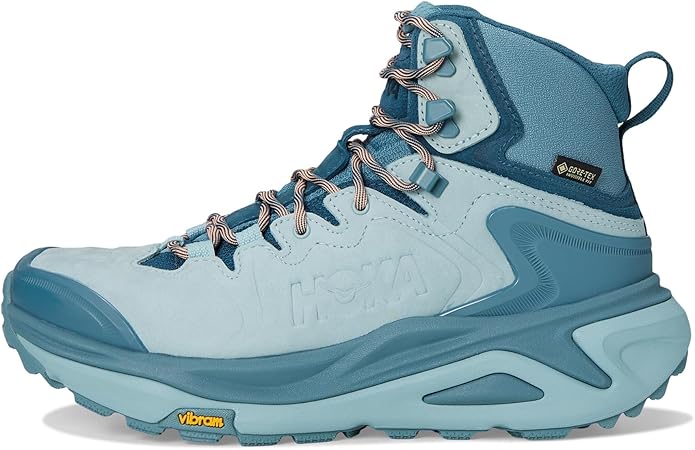
Where HOKA Kaha 3 GTX Women’s Hiking Boot wins
HOKA Kaha 3 GTX Women’s Hiking Boot makes more sense when the reason you are shopping is protection, wet-trail confidence, carrying stability or a more supportive feel. The card below gives the scorecard; this section explains when those advantages actually matter on trail.
Choose it when
- You want more boot structure for long wet hikes.
- You prefer a premium cushioned platform with mid-cut coverage.
- You hike rougher trails where a low shoe feels underbuilt.
- Its strongest fit is long wet hikes, cushioned trekking comfort and premium boot buyers.
Trade-off to check
Higher price and more boot than casual walkers may need. If you hike in hot weather, mostly on dry paths or with a very light load, that extra structure may feel unnecessary.
Best for: Women who want maximum cushioning, waterproof protection, long-day comfort and a premium modern hiking boot The Kaha 3 GTX is the premium comfort pick for women who want a cushioned mid-height hiking boot with waterproof protection, a grippy Vibram outsole and a smoother ride than old-school leather trekkers.
Key trade-offs
These two products solve overlapping but different problems. A low shoe is usually easier to wear often; a boot usually earns its place when the trail becomes wetter, rougher, colder or more load-bearing. Use the matrix below to choose by situation instead of by category label alone.
Choose HOKA Anacapa 2 Low GTX Women’s Hiking Shoe if…
- Low-cut comfort is the priority.
- You hike maintained trails with occasional wet conditions.
- You want cushion without too much boot feel.
Choose HOKA Kaha 3 GTX Women’s Hiking Boot if…
- You want more protection and coverage.
- You are paying for premium boot comfort, not just brand name.
- You hike longer routes where support and grip matter.
Detailed decision matrix
Think of this as a fit-and-terrain decision. HOKA Anacapa 2 Low GTX Women’s Hiking Shoe is the more natural choice when your hikes are frequent, moderate and light. HOKA Kaha 3 GTX Women’s Hiking Boot becomes easier to justify when protection, weather resistance and underfoot support are more important than quick low-shoe comfort.
Terrain and weather
On dry maintained paths, the lower option is usually easier to live with. On wet grass, rocky descents, muddy forest tracks or shoulder-season hikes, the boot-style option gives you more coverage and a more secure feeling around the ankle. Waterproof membranes help in wet conditions, but they can also feel warmer in summer.
Fit and fatigue
More support is not automatically more comfortable. A boot that fits poorly can cause more fatigue than a lighter shoe that locks the heel well. Check heel slip, toe pressure on descents, lace pressure over the instep and whether the collar rubs the ankle before treating either model as the obvious winner.
Pack weight
With a small daypack, low shoes and fast hikers often feel more efficient. With a heavier day load, camera gear or a light overnight pack, a mid boot can add useful confidence. The heavier and more uneven the route, the more boot-like structure starts to matter.
Long-term value
Value is not only price. It is how often you will actually wear the footwear. A technical boot can be a poor value if it stays in the closet on easy trails, while a low shoe can be a poor value if it never feels secure on the terrain you hike most.
FAQ
Is HOKA Kaha 3 GTX overkill for easy day hikes?
It can be. If the trail is easy and dry, Anacapa 2 Low GTX or another low shoe may be more practical.
Which HOKA is better for wet trails?
Both are waterproof-oriented options, but Kaha 3 GTX offers more boot coverage. Anacapa is more agile and lower cut.
Which is better for long walks?
Anacapa is easier for mixed trail and walking days. Kaha makes more sense when long walks include rough, wet or hilly terrain.
Final verdict
If you want the simpler daily-hiking choice, start with HOKA Anacapa 2 Low GTX Women’s Hiking Shoe. If your trails are wetter, rougher or more supportive-footwear focused, choose HOKA Kaha 3 GTX Women’s Hiking Boot. The right answer is the one that matches your normal terrain, not the one that looks more technical in isolation.
Leave a Reply